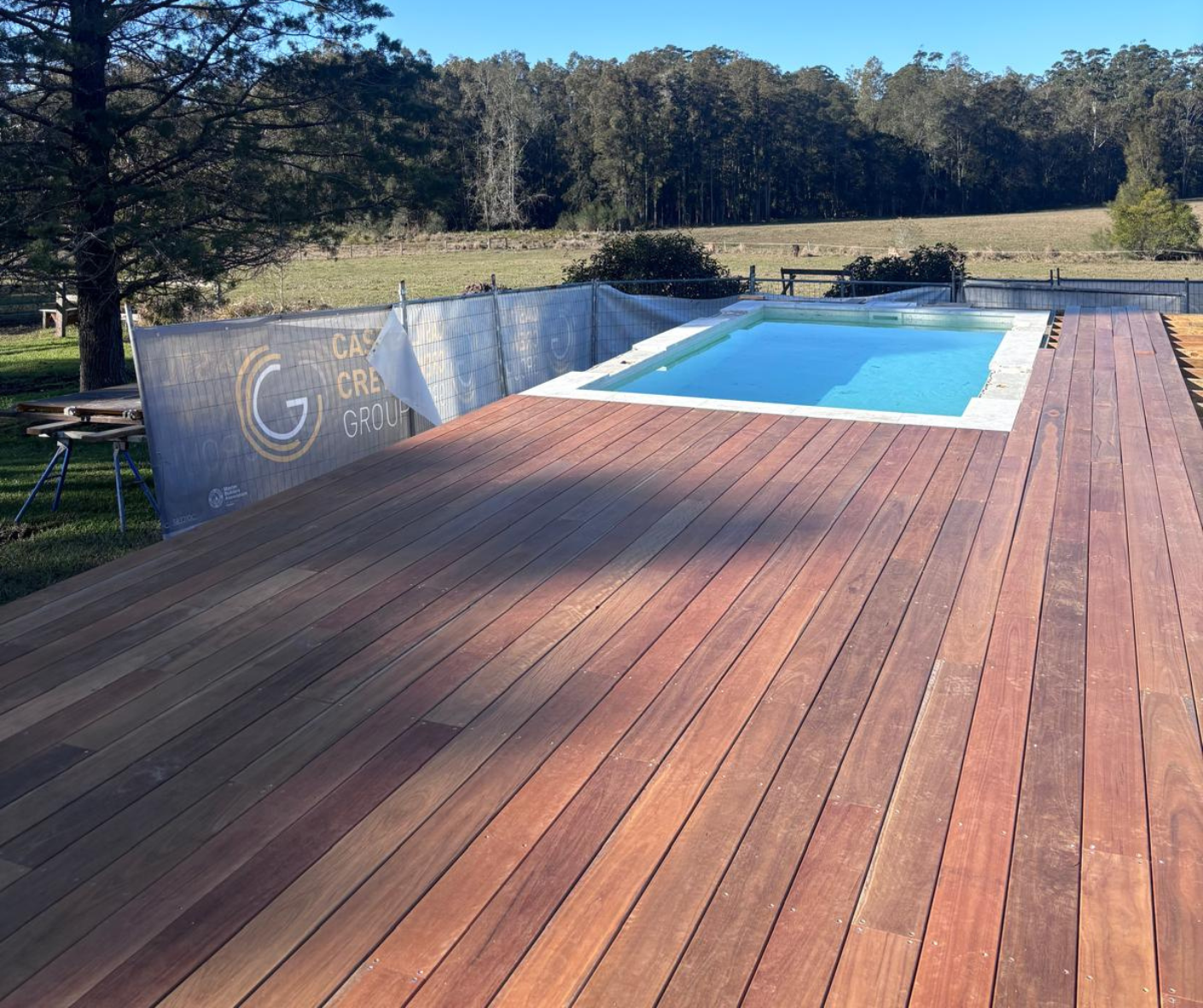

Composite Decking Installation: How a Builder Does It
Most homeowners searching how to install composite decking want two things: a deck that looks sharp from day one and stays strong through years of weather, foot traffic, and weekend use. What separates a deck that holds up from one that creaks, cups, or starts pulling at the frame is what happens before the first board goes down.
The catch is that composite rewards good planning. You need a solid, level subframe, correct spacing, and the right fixing system for your board brand. If you treat it like timber and hope for the best, it will remind you later.
What Is Composite Decking Installation?
Composite decking installation is the process of building a structural timber or steel subframe and fixing engineered composite boards on top using a brand-specific clip or concealed fastener system. The boards are made from a blend of wood fibre and polymer, which makes them more stable than timber but also more sensitive to how they are fixed and spaced.
Done correctly, composite delivers a deck that resists rot, fading, and the kind of splintering that makes barefoot summers unpleasant. Done incorrectly, it moves, squeaks, and voids your warranty. The difference almost always comes down to the frame and the fixing method, not the boards themselves.
For homeowners wondering how to install composite wood decking, the honest answer is that simple ground-level decks are within reach of a confident builder. Anything raised, anything requiring approval, or anything with stairs and balustrades is a job for a licensed professional.
The Builder's First Step: Site Assessment
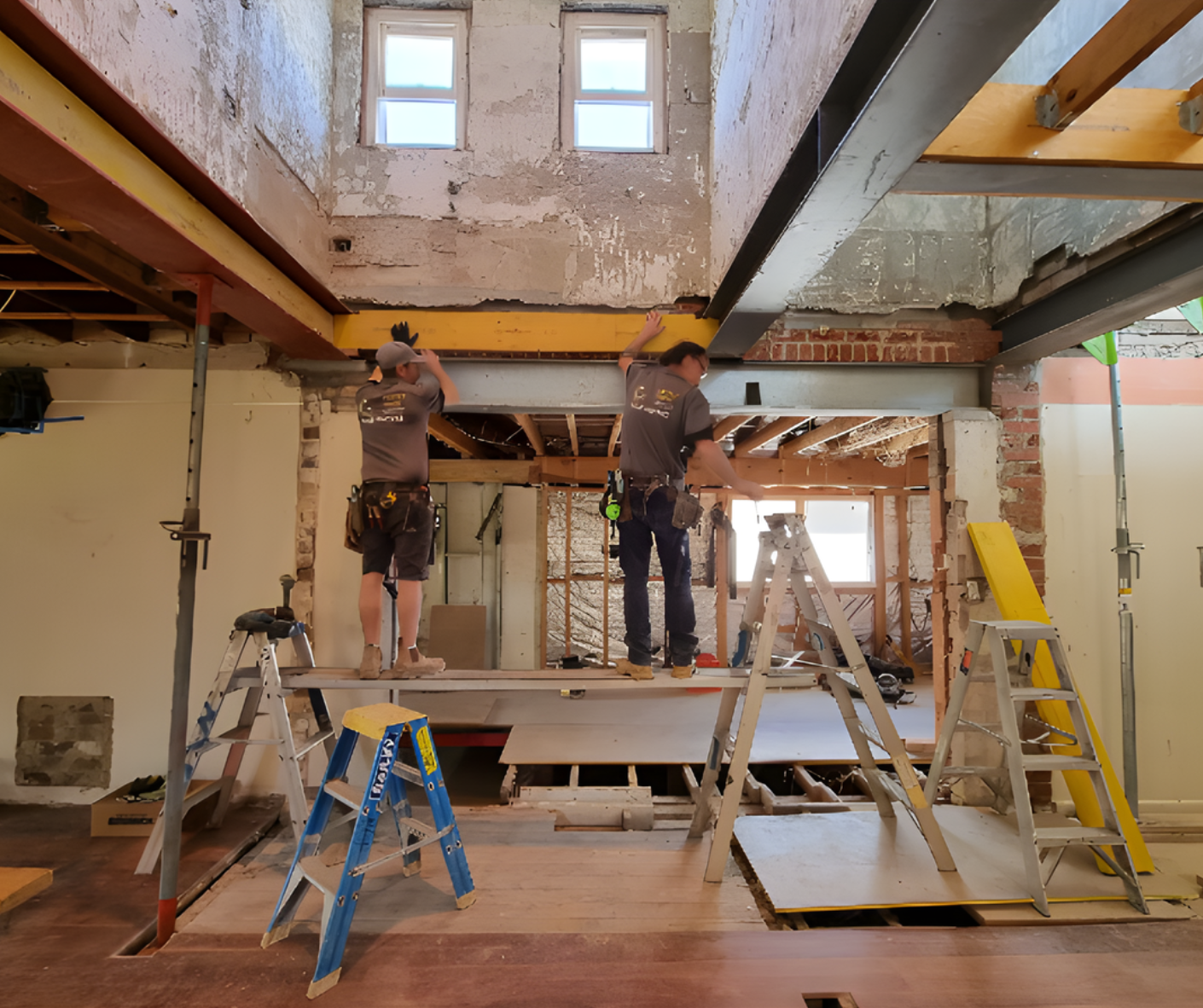
Before any material is ordered, a builder visits the site. This is not a formality. A site assessment on a decking job covers more than most homeowners expect.
Matt looks at the slope and drainage first. Water has to go somewhere, and if the site is not prepared correctly, it will sit under the frame. Even composite boards on a wet, poorly drained subframe will have problems, because it is the structural timber that suffers first.
He also checks access for delivery and machinery, the condition of any existing structure if the deck is being replaced, and any constraints around boundaries or existing services. If the deck is being attached to the house, the condition of the existing wall framing and weatherproofing matters too.
On decking projects in Port Macquarie and surrounds, Matt also confirms whether approval is required. Height above ground, position relative to boundaries, and whether the deck forms part of a larger build all affect whether a Complying Development Certificate or full Development Application is needed. Understanding the CDC versus DA process early saves a lot of rework later.
How Composite Deck Installation Differs from Timber
Understanding how to install composite wood decking differently from timber is what separates a builder who has laid it before from one who has not.
Composite boards move with temperature. They expand and contract as the seasons change, which means the gaps between boards and at board ends are not just aesthetic choices; they are functional requirements. Too tight and the boards buckle in summer. Too wide, and the deck looks sloppy and traps debris.
The fixing system is also different. Most composite systems use hidden clips rather than screws through the face of the board. The clip type, spacing, and installation method vary by brand, and using the wrong clip or substituting a generic alternative is one of the most common causes of squeaking, board creep, and warranty voidance.
Dark board colours absorb significantly more heat than lighter ones in full sun. This sounds minor until you try to stand on the deck barefoot at 3 pm in January. Colour selection, aspect, and pergola coverage are all part of the planning conversation.
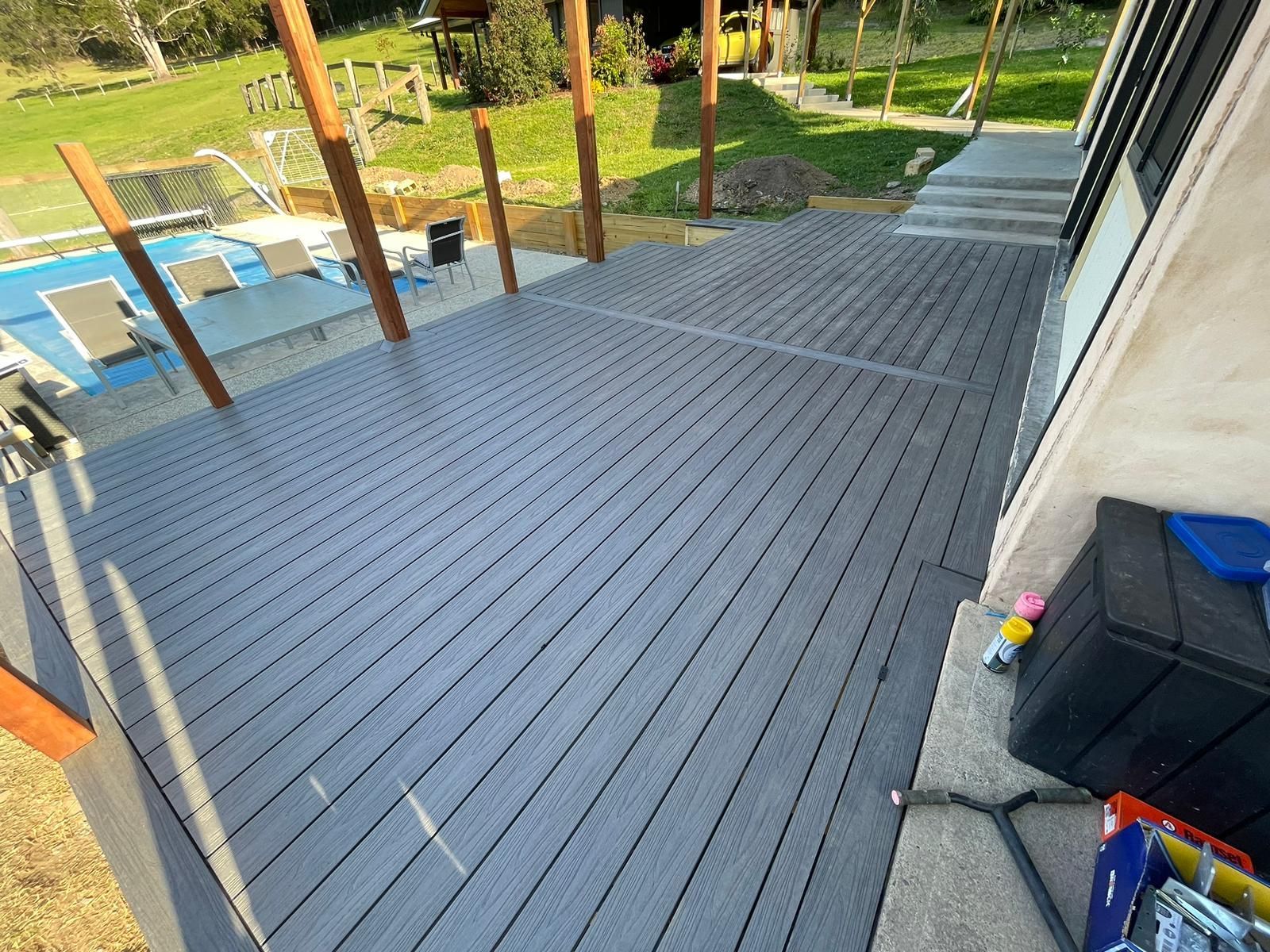
Step-by-Step Process of How to Install Wood Decking
Scope of Works and Quote
Once the site assessment is complete, Matt puts together a formal scope of work. This covers the full build: footings, subframe, board type and fixing system, any fascia, trims, stairs, and balustrades, plus drainage provisions and any approval costs. The quote reflects this scope, not a ballpark.
There are no hidden variations on a well-scoped decking job. The items that commonly cause budget surprises are the ones that were not properly assessed at the start: unexpected rock or ground conditions, subframes that need replacing, and services that need rerouting. Identifying these at the inspection stage is what prevents them from becoming variations mid-project.
Footings and Subframe
The subframe is the most important part of the build. On a composite deck, it matters even more than on timber, because composite boards are less forgiving of a frame that is out of level.
Footings are set first, either concrete pads or post stirrups, depending on the design. Posts go in plumb and to height, bearers span between them, and joists run perpendicular to the board direction. Joist spacing for composite is tighter than standard timber framing, typically 400 mm centres or closer depending on the board brand and profile.
Every joist is checked for level before the first board goes down. A wavy frame creates a wavy deck, and no amount of careful board laying fixes that once it is set.
All structural fixings are galvanised or stainless steel. In a coastal environment like Port Macquarie, using mild steel fixings in outdoor framing is a short-term saving that becomes a long-term problem.
Board Acclimation
Composite boards are delivered and stacked flat on site before installation begins. This acclimation period allows the boards to adjust to local temperature and humidity conditions before being fixed. The required time varies by product, and it is specified in the manufacturer's installation guide for a reason.
Skipping acclimation is one of the most common mistakes on composite jobs. Boards that go down before they have adjusted will continue to move after they are fixed, changing the gap geometry and sometimes causing clips to pop or boards to bow.
Layout and Board Installation
Before the first board is fixed, the full layout is mapped out. Board direction, joint locations, picture frame borders, and breaker board positions are all confirmed against the measured frame. This is where small errors in planning become visible, and fixing them at this stage costs minutes. Fixing them after the boards are down costs days.
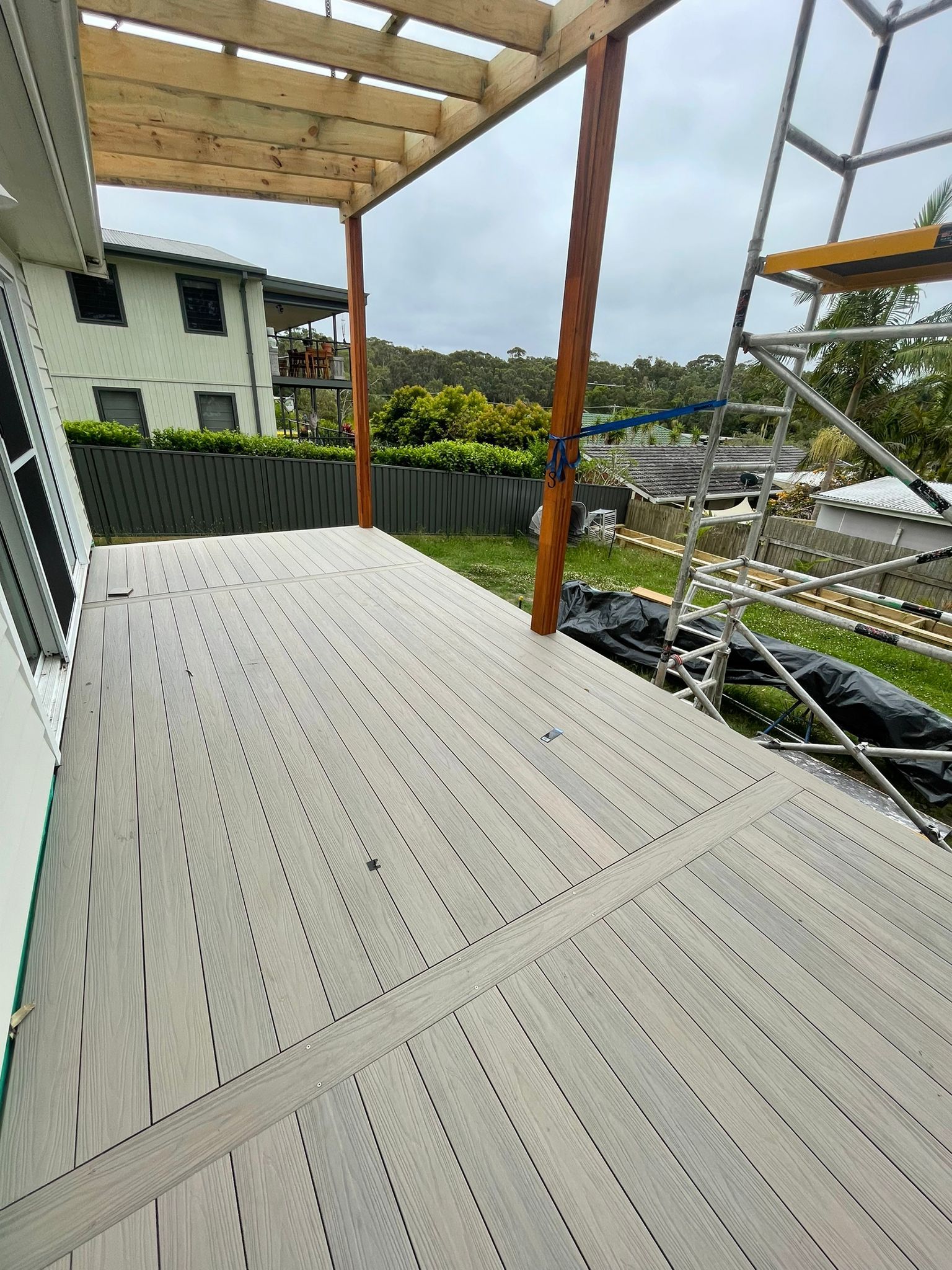
Edge profiles and starter hardware go in first to lock in the perimeter alignment. Boards are then laid from the starter edge, with clips fitted at every joist point. Each clip sets the side gap and locks the board edge. Anti-movement clips are used on long runs as specified by the manufacturer.
Butt joints, where board ends meet, are planned as a pattern rather than placed arbitrarily. Staggered joints look intentional. Random joints look like an afterthought.
Breaker Boards and Finishing Details
Breaker boards run perpendicular to the main deck and manage expansion and add a design element. Measured and cut carefully, they sit in the centre of the deck, where any error is highly visible. On a well-built composite deck, the breaker boards are what give it a premium, considered look.
Fascia boards are fitted with slight clearance so they do not bind as the decking expands. Pre-drilled oversized holes and consistent fastener spacing prevent fascia from lifting or warping over time.
Stairs, Balustrades, and Add-Ons
If the deck includes stairs or balustrades, these are installed last. Stair stringers, handrails, and balustrade systems all need to meet the Building Code of Australia requirements for strength, height, and baluster spacing.
On decks with a fall greater than one metre, balustrade selection also matters. A frameless glass balustrade is achievable but requires the correct engineering. Matt confirms what is compliant at the scoping stage, so there are no surprises when the balustrade goes in.
Lighting, pergola structures, and any electrical add-ons are coordinated with the relevant trades and scheduled into the build sequence. On larger projects, these are often part of a broader home renovation or extension scope, and aligning the deck build with the rest of the project avoids rework and reduces cost.
Final Inspection and Handover
Before handover, the deck is walked in full. Every clip is checked, every board edge is confirmed, drainage is tested, and all fascia, trim, and balustrade elements are signed off. The deck is cleaned and handed over with any relevant compliance documentation.
On decks requiring council approval, the structural engineer sign-off and any required certifications are provided at handover.
How to Install Composite Wood Decking Without Costly Mistakes
The issues Matt sees most often on composite decks that were not professionally installed fall into a few consistent categories.
Incorrect joist spacing is the most common structural problem. Homeowners follow a timber deck guide, space the joists at standard centres, and then discover their composite system needs tighter spacing. By the time the flex or bounce appears, the boards are all down.
Skipped acclimation leads to gapping or buckling, sometimes within the first summer. The fix often involves pulling boards, resetting clips, and reinstalling, which costs more than the savings from rushing.
Wrong fixings are surprisingly common. Generic clips from a hardware store look similar to the system-specific ones and cost less. The difference shows up as squeaking underfoot or boards that have crept out of alignment over a season.
Drainage problems show up later. A deck built without considering where water runs can sit on wet ground, create pooling, and shorten the life of the structural frame significantly.
Get Your Composite Deck Built Right
If you are planning a new composite wood decking installation in Port Macquarie or the surrounding area, CastleCrew Group can manage the project from site assessment through to handover. Matt and the team handle the approval process, the structural engineering where required, the full build, and all the trades coordination so you are not managing multiple contractors yourself.
Contact us to arrange a site visit and discuss your
decking and
renovation plans. If you are also working through a broader
custom home or renovation project, including your deck in the main works can often save on cost, time, and disruption.
Key Takeaways
- The subframe is the most critical part of a composite deck build. An out-of-level or under-spaced frame produces a poor result regardless of board quality.
- Composite boards require brand-specific fixing systems and planned expansion gaps. Substituting generic clips or skipping gap planning causes squeaking, board movement, and warranty issues.
- Site assessment before ordering materials is how a professional builder avoids mid-project surprises on footings, drainage, approvals, and existing structure.
- Board acclimation is a specification requirement, not a suggestion. Boards fixed before they adjust to local conditions will continue to move after installation.
- Raised decks, stairs, balustrades, and any project requiring council approval should be handled by a licensed builder to ensure compliance with the Building Code of Australia.
Frequently Asked Questions About Composite Deck Installation
How is composite wood decking installation different from a standard timber deck build?
The key differences are in the fixing system, joist spacing, and expansion planning. Composite boards use hidden clips or concealed fasteners rather than screws through the face, and they require tighter joist spacing than most standard timber frames. They also expand and contract more significantly with temperature changes, so gaps at board sides, ends, and near fixed objects must be planned to the manufacturer's specification before a board is fixed. A builder familiar with composite systems accounts for all of this at the subframe stage, not as an afterthought once the boards are down.
Do I need council approval for a new composite deck in Port Macquarie?
It depends on the deck height, its position relative to boundaries, and whether it is attached to the dwelling. In New South Wales, many decks can be approved under a Complying Development Certificate if they meet specific setback, height, and site coverage criteria. Decks that fall outside those criteria require a full Development Application through council. CastleCrew assesses approval requirements at the site inspection stage and handles all submissions, requests for information, and council correspondence on your behalf.
How long does a professional composite deck build take?
A straightforward single-level deck without stairs or balustrades can typically be completed in two to four days once materials are on site. Larger decks with stairs, balustrades, pergola structures, or lighting take longer, and lead times on some composite board products can add to the overall schedule. Approvals, where required, need to be factored in separately. Matt confirms a realistic timeline at the quoting stage based on the specific scope.
What composite decking brands does CastleCrew work with?
CastleCrew works with a range of composite products and recommends boards based on the specific application, aesthetic, and budget. The brand chosen affects the joist spacing requirements, the clip system, the range of colours and profiles available, and the warranty conditions. Selecting the right product for the site conditions and intended use is part of the scoping process, not a decision made at the hardware store on the morning of the build.
Can an existing timber frame be used for a new composite deck?
Sometimes. If the existing frame is structurally sound, level, and meets the joist spacing requirements for the composite system being installed, it can be reused. In practice, older frames often need work: corroded fixings, uneven bearers, or joist spacing designed for a standard timber deck rather than composite. Matt assesses the existing structure at the site inspection and provides a clear recommendation on whether it can be retained, repaired, or needs replacing. Reusing a frame that is not suitable is one of the more costly mistakes to undo after the boards are down.
What happens if variations come up during the build?
Variations on a well-scoped job are uncommon but not unusual. They typically arise from site conditions that could not be confirmed before work started, such as ground rock, poor soil-bearing capacity, or existing services in unexpected locations. Any variation is communicated to the client before the work proceeds, with a clear explanation of what was found and the cost to address it. There are no surprises after the fact. CastleCrew's quoting process is designed to minimise variations by identifying likely issues at the assessment stage.
Can my composite deck include a pergola, outdoor lighting, or a privacy screen?
Yes. These elements are commonly added to decking projects and are coordinated as part of the overall build. Pergola structures are engineered and constructed to the relevant building standards, electrical lighting is managed through a licensed electrician, and privacy screens are designed to complement the deck layout and balustrade system. If the deck is part of a larger project, all add-ons are scoped and scheduled to avoid rework and unnecessary disruption.
How do I maintain a composite deck after it is built?
Composite requires significantly less maintenance than timber. Periodic cleaning with a hose or pressure washer on a low setting removes surface debris and keeps the boards looking fresh. Most manufacturers recommend avoiding harsh chemicals and abrasive cleaners that can damage the board surface or void the warranty. CastleCrew provides care guidance at handover based on the specific product installed.
Can CastleCrew handle both the decking and a renovation project at the same time?
Yes, and for clients undertaking a broader renovation or extension, building the deck as part of the same project often makes sense. Having the builder on site for both means the deck is properly integrated with the main dwelling, drainage and services are coordinated correctly, and the client is not managing two separate projects and two sets of trades. For clients considering home extensions or kitchen renovations alongside a new deck, CastleCrew can scope and manage the full project.
What areas does CastleCrew service for composite decking builds?
CastleCrew is based in Port Macquarie and services the surrounding region, including Wauchope, Laurieton, Kew, Kendall, and nearby coastal areas. All subcontractors and suppliers are local, which keeps the build efficient and the supply chain short.