
The Process in Removing a Load Bearing Wall: A Guide From a Licensed Builder
Open-plan living looks effortless on Pinterest. In real life, that "one little wall" might be holding up your roof or upper floor, hiding wiring, plumbing, or both.
If you're researching wall removal, the safest approach is to contact a licensed builder and understand the process: structural assessment first, possibly engineering, temporary support, beam installation, and finishing trades. Done in the right order, the result is a safer, more functional home and far fewer expensive surprises along the way.
How a Load Bearing Brick Wall is Removed: The Short Answer
Removing a load bearing wall is a multi-stage project, not one demolition day. A structural engineer assesses the load and designs the replacement support. Temporary propping holds the load during demolition. A permanent beam is installed, welded and inspected for sign off. Finishing trades patch the ceiling, floor, and paintwork last.
No step can be safely skipped, and the whole job needs a licensed builder and structural engineer working together. A homeowner can be informed throughout, but the structural and certified work must sit with the right professionals.
Structural Assessment Comes First
Before you talk beams or budgets, confirm what the wall is actually supporting. A structural engineer checks load paths and specifies exactly how the weight must be carried once the brick is removed.
The Engineer Designs the New Support Before Any Demolition
The temporary propping plan and the permanent beam design must be locked in before a single brick comes out. The load needs to be supported the whole time, not just at the end when the beam goes in.
Finishing Works After the Wall is Gone
The structural work is only one part of the project, and the tidy-up is where the room starts to look "done." Plan for ceiling repairs, flooring patches, cornice changes, and repainting so you do not end up with a visible scar where the wall used to sit.
Removing A Load Bearing Wall
This checklist of removing a load bearing wall applies whether the wall is brick, block, or stud. The materials change, but the safety logic stays the same.
Confirm if the Wall is Structural
Engaging a structural engineer to determine this. It is also handy for them to check any available house plans, then look at the direction of joists and roof framing. A wall is more likely load bearing when framing members end, lap, or change direction over it.
Locate Hidden Utilities Before Any Opening-Up
Walls often hide electrical cables, plumbing, gas lines, or vents. Find and isolate services early with licensed trades, or the scope and timeline can blow out fast.
Permissions, Permits, and Inspections
Structural changes often need approval and inspections, and rules vary by council and state. In NSW, most structural wall removals require building approval and engineering certification. Checking early protects compliance, insurance cover, and your home's resale value if questions come up later. Learn more about CDC vs DA approvals on the CastleCrew blog.
Brick-Specific Planning Homeowners Often Miss
Brick walls do not behave like timber framing. They are heavy and can crack if loads shift during or after removal.
What the Brickwork is Supporting Above
A brick wall may be holding up roof framing, floor joists, or more masonry. What sits above the wall drives the beam design and the span you can safely open.
How the Beam Bears Into Brick and Why Pad Supports Matter
A beam needs solid support at each end, and a brick often needs padstones or reinforced bearing zones. If the bearing is wrong, you can get cracks, movement, and doors that start sticking.
Partial Opening vs Full Removal
A wide opening can give you the open-plan feel without removing the whole wall. You still need a designed beam, and you may need posts at the sides to carry the load. Matt assesses both options at the initial site inspection so you can make the call with full information.
Temporary Support and Site Safety During Demolition
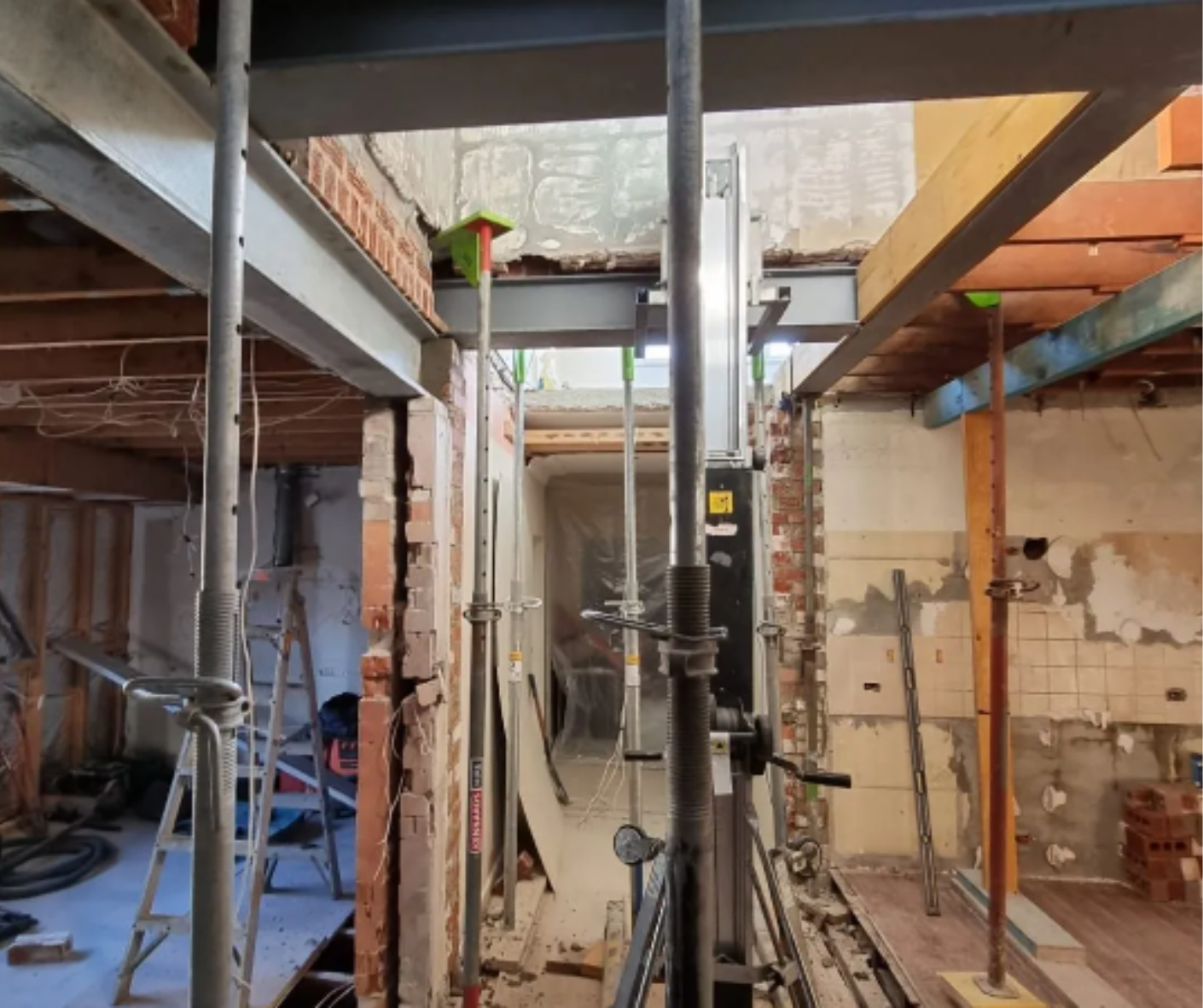
Temporary supports hold the load while the wall comes out. The setup must follow the engineer's plan.
Dust Control, Access, and Protecting Finishes
Sawing through bricks and removal can create hazardous silica dust. Expect dust barriers, protected walkways, and floor covering to keep people safe and prevent damage to the rest of the home.
Installing the Permanent Support
Once the wall is out, the job becomes a precision task. Alignment, bearing, and inspections matter more than speed.
Beam Options and What Drives the Choice
Steel beams suit longer spans and heavier loads in many homes. Engineered timber can work for some openings and can be easier to finish neatly. The structural engineer specifies what is required based on load, not preference.
Posts, Columns, and Where the Load Lands
Some layouts still need posts at the sides to carry the weight safely. The load must land on a solid structure, which may mean extra work below in multi-storey homes.
Inspection and Sign-Off Checkpoints
Certifiers often need to inspect key stages to confirm the build matches the approved design. Keep approvals and sign-off records, because they help with insurance and future resale. CastleCrew provides clients with all documentation at project handover.
Making it Look Seamless Afterwards
Wall removal is only half the job - finishes is what makes the room look complete.
Ceiling Repairs, Bulkheads, and Lighting Changes
Ceilings often need patching where the wall meets plaster, cornice, or battens. You may also need a bulkhead and updates to lights and switches once the layout changes.
Flooring Patching Where the Wall Used to Be
A strip of missing flooring is normal where the wall use to be. Matching timber or tiles can be tricky, so plan for patching, leveling, even redoing the floors to make it look continuous.
Paint Blending and Trim Continuity
Paint needs proper prep, or the patch will show in certain light. Match skirting and architraves so the opening looks planned, not pieced together.
Cost and Timeline
There is no single price that fits every wall removal project. The variables that drive cost most significantly are the engineering complexity, the beam size and span, what services need relocating, and the level of finish required afterwards.
For homeowners planning structural changes as part of a wider renovation, using a clear home construction checklist can help you organise approvals, trades, budget items, and project stages before work begins.
The Biggest Cost Variables
Engineering and approvals are often fixed costs you cannot dodge. Access, beam size, utility moves, waste removal, and the finish level are the big variables you can influence with early planning and clear decisions.
A Realistic Project Timeline by Phase
Think in phases: assessment and design, then quotes and approvals, then structural work, then finishing trades. The structural work itself can move quickly. Approvals and finishing often take longer than clients expect, so build both into your planning from day one.
Choosing the Right Professionals and Avoiding Expensive Mistakes
Here are the key checks to help you pick the right people and keep the job on track. A clear plan and an experienced team reduce risk, cost blowouts, and messy rework.
Questions to Ask Your Structural Engineer
Ask how the load path will change once the wall is removed. Ask what end bearings or posts are required and what inspection evidence they need at each sign-off stage.
Questions to Ask Your Builder
Ask what his process is. From isolating utilities to propping, demolition, and beam installation. Ask how they will manage dust and protect floors, joinery, and nearby rooms. Ask what documentation you will receive at the end.
Paperwork to Keep for Resale
Keep engineering drawings, approvals, inspection sign-offs, and trade compliance certificates. Take photos of hidden structural work before it gets covered. Future buyers and their conveyancers will ask for this documentation, and having it ready protects your position.
Get the Plan Locked In Before Anything Else
CastleCrew projects run smoother when the plan is clear, and everything is documented from day one. Whether you are planning a wall removal, looking at home extensions, or thinking about a broader renovation, the same rule applies: decisions made early are cheaper and less stressful than fixes made mid-build.
Start by getting clear on what you want to achieve and why. Confirm your budget range and the level of finish you expect. Arrange an on-site assessment so constraints are spotted early. Gather any drawings, photos, and council notes you already have.
Contact us today to arrange a site visit with Matt.
Key Takeaways
- Confirm whether the wall is structural by checking house plans and getting a proper structural assessment before committing to removal.
- Allow for hidden services inside the wall. Electrical, plumbing, gas, and vents must be located and rerouted by licensed trades before structural work begins.
- Budget for finishing work as part of the project scope, not as an afterthought. Ceiling repairs, flooring patches, and paint blending add time and cost that is easy to underestimate.
- Approvals and inspections are required for structural changes in NSW. They protect compliance, insurance cover, and resale value.
- Temporary support and permanent beam installation must follow the engineer's specifications exactly so the load is carried safely from demolition through to sign-off.
- Keep all documentation at the end: engineering drawings, permits, inspection sign-offs, and trade compliance certificates.
FAQs
Is a brick wall always structural, or can it be non-structural?
No, a brick wall is not always structural. Some brick walls are veneer cladding or non-load-bearing partitions that carry no structural load at all. The only reliable way to confirm which type you are dealing with is a proper assessment by a licensed builder or structural engineer. Never assume based on appearance alone, because the consequences of getting it wrong are serious. A builder like Matt can usually make an initial call on-site and will bring in an engineer if there is any doubt.
Do I need to engage a structural engineer to remove an internal structural wall?
Yes, in most cases you do. A structural engineer assesses the load path, specifies the correct beam size and material, and determines the bearing requirements at each end of the opening. Their drawings form part of the permit documentation that the certifier uses to approve the work. Without engineering sign-off, you risk non-compliant work that could affect your insurance and create problems at resale. CastleCrew engages preferred engineers on behalf of clients and manages this process from start to completion.
What approvals are typically required for structural wall changes?
In NSW, structural alterations, including load-bearing wall removal, generally require a building approval and certification. Depending on the project, this may come through a Complying Development Certificate or a Development Application, and the engineer's drawings are submitted as part of the approval package. Requirements vary by council and project scope, so checking early avoids delays later. CastleCrew handles the approval process for clients and responds to any ‘Requests For Information’ from the council on your behalf.
Can I create an opening in a brick structural wall instead of removing the whole thing?
Yes, a wide opening is often possible and can achieve the open-plan feel without full wall removal. You still need a structural engineer to design the lintel or beam that spans the opening, and you may need reinforced bearing points or posts at either side. The permit and inspection requirements are the same as for full removal. Matt assesses both options at the initial site visit so you can weigh up the cost and outcome before committing.
What happens if wiring, plumbing, gas, or vents run through the wall?
Licensed trades must identify, isolate, and reroute services before any structural work begins. Gas lines require a licensed gasfitter. Plumbing and electrical require their own licensed tradespeople. Discovering significant services mid-demolition can change the design, add time, and increase cost, which is why a proper pre-demolition inspection is so important. CastleCrew coordinates all trades and ensures nothing is touched without the right person on site to handle it safely.
What type of beam is usually used to replace a structural wall?
Steel beams are the most common choice for longer spans and heavier loads in residential homes, particularly where brick construction is involved. Engineered timber beams can work for some openings and are easier to finish neatly in certain circumstances. The choice must come from the structural engineer based on the load calculations, span, and bearing conditions, not from aesthetics or cost preference. CastleCrew manages steel fabrication, delivery, and installation as part of the project.
Why do floors and ceilings often need extra repairs after wall removal?
When a wall is removed, it leaves behind gaps in the plasterboard, cornice, ceiling battens, and flooring where it connected to the surrounding surfaces. These gaps are not simply cosmetic: they need proper preparation and blending to hold well and look seamless. Matching existing ceiling textures, tile patterns, or timber flooring can be the most time-consuming part of the finish. Planning for this work from the outset and budgeting for it means there are no surprises when the structural phase is done.
What documents should I keep after the work is complete for future buyers?
Keep the structural engineer's drawings and report, the building approval or CDC documentation, certifier inspection sign-offs, and compliance certificates from any licensed trades involved. Photographs of the hidden structural work before it was covered are also valuable. When you come to sell, buyers' conveyancers and building inspectors will ask for evidence that structural changes were approved and built correctly. Having a complete documentation pack ready protects your position and can prevent last-minute complications at settlement.